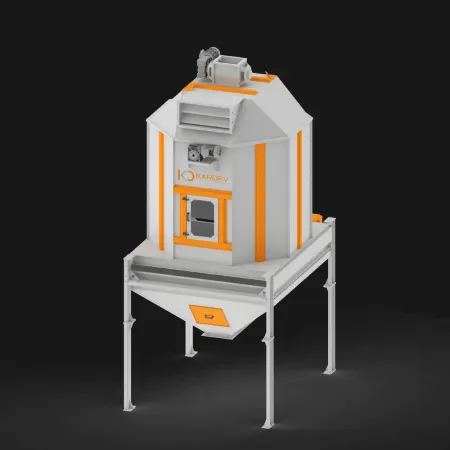
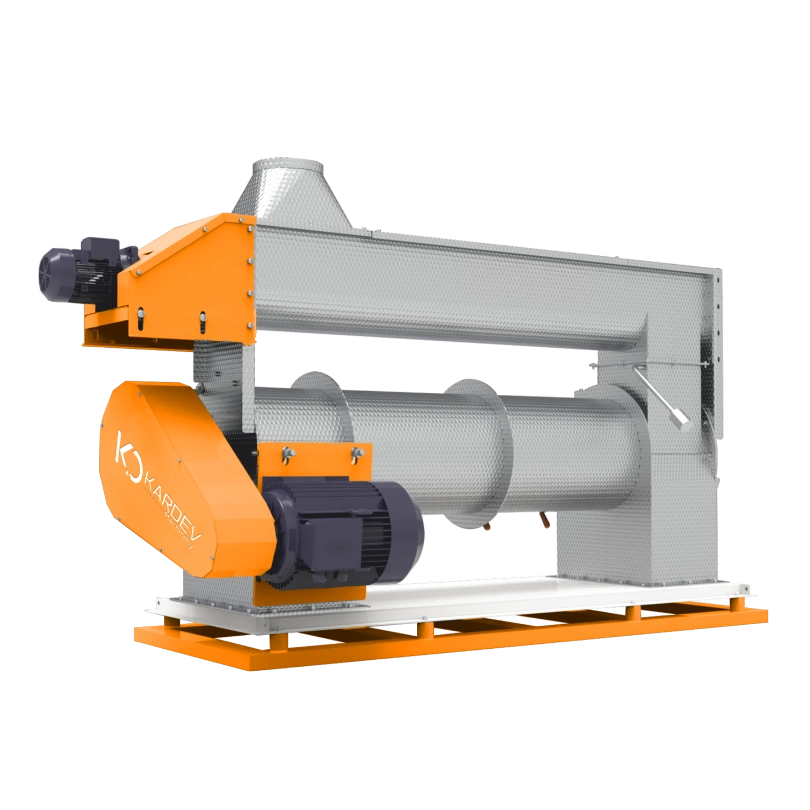
Fat Coater for Animal Feed Pellets
A fat coater is used in animal feed production lines to apply a controlled amount of oil to feed pellets after pelleting and cooling. The system distributes oil over the pellet surface through a combination of liquid spraying and mechanical mixing.
After leaving the pellet cooler and screening equipment, the pellets enter the oil application chamber. Spray nozzles apply oil to the moving product, which then passes through a mixing screw. As the pellets move through the screw conveyor, the oil is distributed more evenly across their surfaces.

The KARDEV fat coating system allows the oil dosing rate to be adjusted according to the pellet flow. Depending on the required production capacity, the machine can be manufactured with a single-shaft or double-shaft mixing arrangement.
What Is a Fat Coater Used For?
A fat coater is used to apply oil or suitable liquid additives to animal feed pellets after cooling. The liquid is sprayed onto the pellets and distributed across their surfaces as the product moves through the coating system.
During operation, the pellet flow is monitored, allowing the oil application rate to be adjusted according to the amount of feed passing through the machine.
How Does a Fat Coater Work?
After cooling and screening, the feed pellets enter the oil application chamber. A load cell-based weighing system provides information about the pellet flow, which is used to adjust the oil dosing pump.
The pump delivers oil to the spray nozzles, which apply it to the pellets as they pass through the chamber.
The coated pellets then move into the mixing screw located below the chamber. As the pellets travel through this section, the mixing action helps distribute the oil over their surfaces.
An oil flow meter monitors the quantity of oil delivered to the system. KARDEV manufactures fat coaters with single-shaft or double-shaft configurations according to the required line capacity.
Oil Dosing System
The oil dosing rate is adjusted according to the quantity of pellets passing through the machine.
Information from the load cell-based weighing system is used to monitor changes in pellet flow. When the feed rate increases or decreases, the oil pump setting can be adjusted accordingly.
The actual quantity of oil supplied to the spray nozzles is monitored through a flow meter. This measurement also allows the operator to check the oil delivery rate against the required dosing setting.
Spray Nozzles, Pump and Flow Measurement
Oil is delivered from the pump to the spray nozzle arrangement.
As the pellets pass through the application chamber, the nozzles spray oil onto the moving product. The purpose is to distribute the liquid across the pellet flow rather than applying it in one concentrated area.
The flow meter measures the amount of oil passing through the liquid supply line.
Pellet Mixing System
After oil application, the pellets enter the mixing screw positioned beneath the spraying chamber.
The screw moves the pellets forward while continuously turning and mixing the product. This movement helps distribute the applied oil across different pellet surfaces.
As the pellets travel through the mixing section, the oil is spread through the product stream, producing a more uniform coating at the discharge.
Why Is Oil Coating Used in Animal Feed Production?
Adding the entire required quantity of oil before pelleting is not always suitable for feed production.
Higher oil inclusion levels before pelleting can influence the material’s behavior inside the pellet mill and may affect pellet durability.
For this reason, part of the oil required by the feed formulation can be applied after the pellets have been produced and cooled.
During post-pellet coating, oil is sprayed directly onto the pellet surface. This allows a portion of the liquid ingredients in the feed formulation to be added after pelleting, while the applied oil quantity can be monitored during production.
How Is Uniform Oil Distribution Achieved?
Uniform oil distribution depends on maintaining the correct relationship between pellet throughput and the amount of oil applied.
In the KARDEV fat coating system, the pellet flow is monitored through a load cell-based weighing arrangement. The oil pump setting is adjusted according to the product flow.
After spraying, the pellets enter the mixing screw, where continuous movement helps distribute the applied oil across different pellet surfaces.
When the oil dosing rate is matched to the actual pellet flow, the coating process produces a more consistent distribution of oil.
Which Animal Feed Products Require Fat Coating?
Fat coating systems are used for pelletized animal feed products.
After leaving the pellet mill, the feed pellets are cooled and screened before entering the oil coating equipment.
The need for coating depends on the feed formulation. When oil or another suitable liquid must be added after pelleting, the coating unit provides a controlled application point.
This process can be used in poultry feed and cattle feed production where post-pellet oil application is required.
The KARDEV fat coater is designed for pelletized products rather than mash feed. Its operating principle is based on spraying liquid onto pellets as they pass through the application chamber.
How Is Fat Coater Capacity Determined?
The primary factor in selecting fat coater capacity is the quantity of pellets entering the coating unit.
The machine must handle the throughput of the production line without restricting the flow of feed. As the pellet throughput increases, the coating and mixing arrangement must be selected accordingly.
Pellet Flow Rate
The quantity of pellets entering the coating machine may vary during production.
At certain times, the unit may receive a higher product flow, while at other times the feed rate may decrease.
The load cell-based weighing arrangement monitors changes in the pellet flow and provides information used for oil dosing adjustments.
When the quantity of pellets increases or decreases, the oil application rate can be adjusted to maintain the required relationship between oil and feed.
Required Oil Application Rate
The amount of oil applied depends on the feed formulation and the quantity of pellets passing through the system.
After setting the required delivery rate at the pump, oil is supplied to the spray nozzles.
The actual oil flow is monitored through the flow meter during operation.
Single-Shaft or Double-Shaft Configuration
KARDEV fat coating systems can be manufactured with single-shaft or double-shaft mixing arrangements.
The selection depends on the required pellet throughput and operating conditions.
For higher production capacities, a double-shaft arrangement may be preferred to provide sufficient product handling and mixing capacity.
Technical Features of the KARDEV Fat Coater
The KARDEV fat coater combines pellet flow monitoring, liquid dosing, spraying and mechanical mixing within the same coating process.
After cooling and screening, the pellets enter the system for controlled oil application.
Load Cell-Based Pellet Flow Monitoring
The load cell-based weighing arrangement provides information about the quantity of pellets passing through the application section.
This information is used to adjust oil dosing according to the product flow.
Oil Pump and Spray Nozzle System
The oil pump supplies liquid to the spray nozzle line.
The nozzles apply oil to the pellets while they pass through the application chamber. The spraying arrangement is intended to distribute oil across the moving pellet flow rather than concentrate it at a single point.
Oil Flow Meter
The flow meter measures the actual quantity of oil passing through the supply line.
After the pump setting is adjusted, the operator can monitor the delivered oil flow.
If the measured flow changes during production, the oil dosing arrangement can be checked and readjusted as needed.
This allows the operator to monitor actual oil delivery rather than relying only on the pump setting.
Mixing Screw
After passing through the spraying section, the pellets enter the mixing screw.
The screw does more than transport the pellets forward. Its movement also turns and mixes the product, helping spread the applied oil across the pellet surfaces.
Single-Shaft and Double-Shaft Options
KARDEV fat coaters can be manufactured with single-shaft or double-shaft configurations.
The appropriate arrangement is selected according to the production capacity and material flow requirements of the feed mill.
What Should Be Considered When Selecting a Fat Coater?
Selecting a fat coating machine requires more than checking the nominal capacity shown in a catalogue.
The actual pellet throughput from the cooler and the amount of oil required by the feed formulation must be considered.
The machine must handle the continuous product flow while allowing the oil dosing rate to respond to changes in pellet throughput.
For installations in existing feed mills, the pump, spraying arrangement and mixing section must also be selected according to the operating conditions of the production line.
Actual Feed Production Capacity
The quantity of pellets entering the coating unit per hour should be determined before selecting the equipment.
KARDEV manufactures single-shaft and double-shaft coating systems according to the required capacity.
The selection should be based on the actual operating throughput of the production line.
Oil Dosing Control
The required oil application rate depends on the feed formulation.
Because pellet flow may vary during operation, the quantity of oil delivered must be adjusted accordingly.
In the KARDEV system, product flow information from the load cell-based weighing arrangement is used to adjust the oil pump setting.
Spraying and Mixing Arrangement
The spray nozzles apply oil to the pellets before they enter the mixing screw.
As the pellets move through the mixing section, the applied oil is distributed across their surfaces.
When selecting the machine, the spraying and mixing arrangements must be suitable for the pellet throughput of the production line.
Position Within the Feed Production Line
The KARDEV fat coating system operates after the pellet cooler and screening equipment.
In a new feed mill, the coating unit can be included in the production line layout from the initial design stage.
For an existing facility, the available installation space between the cooler, screening equipment and downstream conveying system must be evaluated.
Cleaning and Maintenance Access
Components such as spray nozzles, pumps and flow meters must remain accessible for inspection and maintenance.
In oil application systems, deposits or blockages may develop around the spraying equipment over time.
Providing sufficient access to these components helps reduce the amount of dismantling required during maintenance and makes cleaning more practical.
OTHER PRODUCTS
Quality is never a coincidence.