Premix Micro Dosing System
Not all ingredients in a feed formulation are used in the same quantities. Grains and protein meals may account for hundreds of kilograms or several tons per batch, while premixes, vitamins, minerals and other feed additives are added in much smaller amounts. As the required dosage becomes smaller, accurate weighing and controlled feeding become increasingly important.
A premix micro dosing system is used to weigh and dose low-inclusion ingredients according to the feed formulation. The purpose is not simply to transfer material from a bin to the mixer, but to deliver the required quantity consistently from one production batch to the next.

KARDEV designs micro ingredient dosing systems for feed mills according to the number of ingredients, minimum and maximum dosage per batch, material characteristics, batch capacity and mixer cycle time.
How Does a Micro Dosing System Work?
In a KARDEV micro dosing system, each micro ingredient is stored in a dedicated bin. Based on the selected feed formulation, the control system determines which ingredients are required and the target quantity for each one.
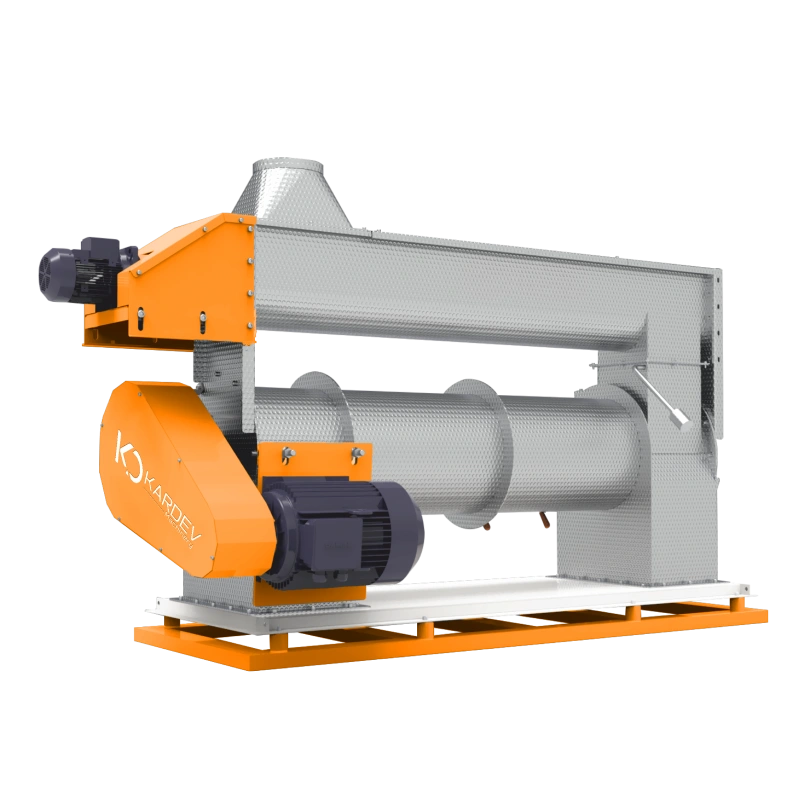
Dosing feeders transfer the materials from the bins to the weighing unit at a controlled rate. Feeder selection depends on bulk density, particle characteristics and material flowability. Fine or poorly flowing powders require particularly stable feeding conditions.
During weighing, the quantity is continuously monitored by load cells. As the target weight is approached, the feeding rate can be reduced to provide better control during the final dosing stage.
Once the required quantity is reached, feeding stops. The weighed ingredients are then discharged into a collection hopper or transferred to the mixer line. When several micro ingredients are used in the same formulation, dosing continues according to the programmed sequence.
Why Is Micro Dosing Important in Feed Production?
Micro ingredients make up a relatively small part of a feed formulation. As a result, even a small absolute deviation can represent a significant percentage of the target dosage.
For example, a deviation of 0.5 kg has a very different effect on a target dosage of 5 kg than on a raw material weighed at several hundred kilograms per batch.
For this reason, KARDEV evaluates micro ingredient dosing separately from the batching and weighing of main raw materials.
System configuration is based on factors such as:
- number of micro ingredients
- minimum and maximum dosage per ingredient
- bulk density and flow characteristics
- batch size
- mixer cycle time
Dosing Accuracy for Premixes and Micro Ingredients
As the required dosage becomes smaller, correct feeder and weighing unit selection becomes more important.
The system should therefore not be sized only according to its maximum weighing capacity. The minimum and maximum dosage required in the plant’s actual formulations should also be considered.
The amount delivered by the dosing screw per revolution is particularly important when approaching the target weight. If the screw delivers too much product, small target quantities can be difficult to achieve even with an accurate weighing system.
Depending on the application, the screw can operate at a higher speed during initial filling and slow down as the target weight is approached.
Material density and flowability also influence feeding performance. When a new ingredient is introduced, its behaviour inside the bin and feeder should therefore be checked in addition to its target weight.
Factors Affecting Micro Dosing Performance
Material Flow to the Feeder
Fine or cohesive powders may bridge above the bin outlet. The dosing screw can then continue rotating without receiving enough material, increasing dosing time. If the bridged material suddenly collapses, excessive product may enter the weighing hopper.
Material Level Inside the Bin
As the material level falls, feeding conditions at the screw inlet may change. Unstable feeding at low levels can increase dosing cycle time.
Correct Dosing Screw Selection
Screw diameter, geometry and rotational speed should be selected according to the required dosing range and material characteristics.
If dosing time begins to increase, simply raising screw speed may not solve the problem. The material level, bin outlet and feeder inlet should first be checked.
Integration with the Feed Mixer
The micro dosing system and feed mixer should be considered as parts of the same batching process.
Accurate weighing is only one part of the operation. The prepared micro batch must also reach the mixer at the correct point in the production cycle.
If micro dosing takes too long, the mixer may remain idle. If the mixer is not ready for the next batch, the dosing system may have to wait.
KARDEV therefore evaluates mixer batch capacity and cycle time together with the micro dosing process.
PLC-Controlled Recipe and Dosing Management
A micro dosing system can be integrated with the feed mill automation system.
Depending on the project configuration, production recipes can define the required micro ingredients and their target quantities. Dosing, weighing and mixing sequences can then be coordinated through the PLC system.
The required level of automation depends on the plant layout, number of recipes, operating method and existing control system.
Maintenance and Inspection
Dosing screws should be periodically checked for wear and product build-up. Deposits on the screw or inside the housing can affect feeding performance.
Load cells and mechanical connections around the weighing hopper should also be inspected. Unintended contact with another structural component can affect weighing accuracy.
Bins and product-contact surfaces should be cleaned during ingredient changes to reduce carryover from one premix or additive to another.
Custom Premix Micro Dosing Systems by KARDEV
A micro dosing system should be configured around the formulations and materials actually used in the feed mill rather than selected only according to nominal capacity.
For each project, KARDEV evaluates the number of micro ingredients, minimum and maximum dosage per ingredient, material characteristics, batch capacity, required number of bins and mixer cycle time.
Depending on the project, the system can include:
- dedicated micro ingredient bins
- dosing screw feeders
- a weighing hopper with load cells
- discharge equipment
- PLC and feed mill automation integration
For a new feed mill or a micro dosing system to be added to an existing line, providing KARDEV with the batch capacity, number of micro ingredients and minimum/maximum dosage per ingredient is sufficient to begin determining the appropriate system configuration.
Frequently Asked Questions
What is a micro dosing system?
A micro dosing system weighs and doses premixes, vitamins, minerals and other low-inclusion ingredients according to the feed formulation.
How is micro dosing system capacity determined?
Batch size, number of micro ingredients, dosage per ingredient, feeder capacity and mixer cycle time should be evaluated together.
Which ingredients can be handled?
Premixes, vitamins, minerals and various low-inclusion feed additives can be handled. Bin and feeder design should be selected according to the characteristics of the material.
What affects micro dosing accuracy?
Minimum dosage, weighing capacity, load cells, dosing screw design, bulk density, flowability and feeding conditions at the bin outlet can all influence dosing performance.
OTHER PRODUCTS
Quality is never a coincidence.