Flake Press
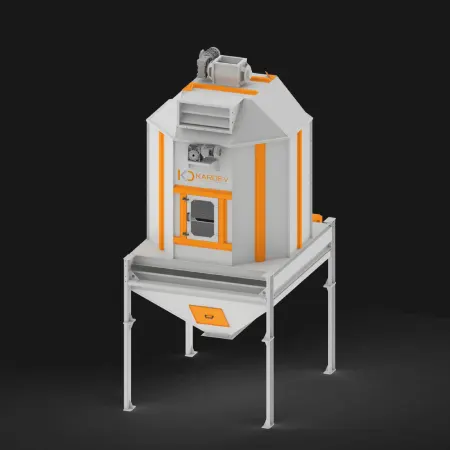
A flake press flattens steam-conditioned corn, barley and other grains between rollers to produce flakes. Before the grain reaches the press, it is heated and softened with steam in the conditioning tower so it can be compressed more evenly and with less breakage.
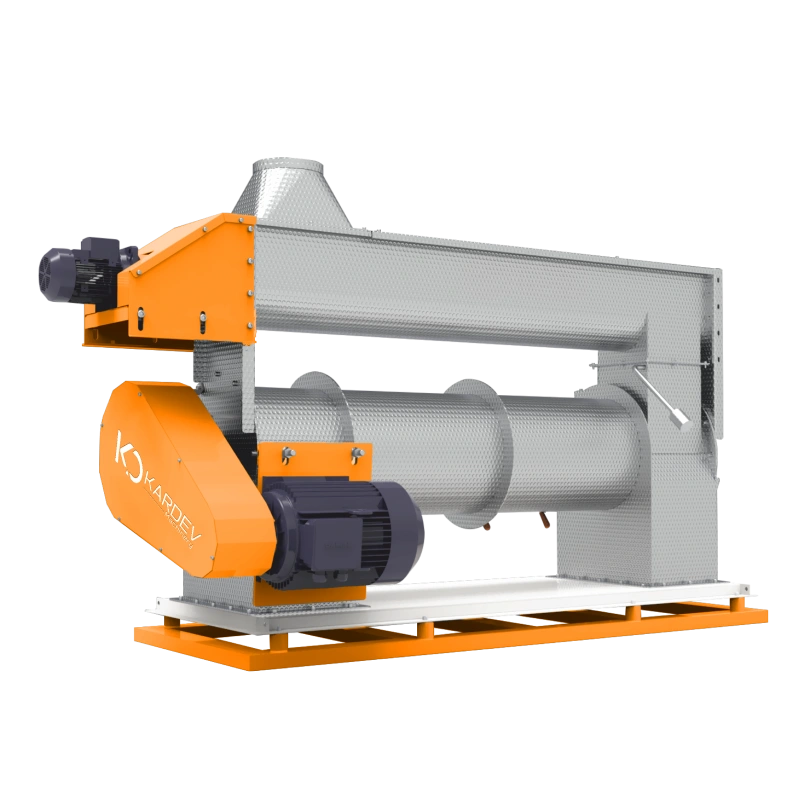
The conditioned grain enters through a feeder, which spreads it across the roller width. It then passes between the rollers and comes out as flakes. The roller gap controls the basic thickness setting. In KARDEV flake presses, the roller gap and operating pressure are controlled through the hydraulic system, while a drum feeder distributes the grain across the roller surface.

What Does a Flake Press Do?
Steam conditioning and flaking change the physical structure of the grain and can improve starch availability for digestion. This is why steam-flaked corn is widely used in cattle feeding, while barley and other grains can be processed in the same way.
The flake press is one of the main machines in a grain flaking line. It turns conditioned whole grain into thin, consistent flakes. Final flake quality, however, does not depend on the press alone. Grain conditioning, feed distribution, roller adjustment, roller condition and machine load all affect the result.
If the grain reaches the press too hard, the feed is uneven or the rollers are worn, broken kernels and fines can increase.
How Does a Flake Press Work?
Grain leaving the steam conditioning tower enters the feeder, which spreads it across the full working width of the rollers. Even distribution is important because uneven feeding creates different loads across the press.
The grain is then pulled between the rollers and compressed into flakes. Thickness is adjusted by changing the distance between the rollers, but the roller gap is a machine setting rather than an exact measurement of the finished flake.
Actual flake thickness can also change depending on:
- Grain moisture
- Grain hardness
- Conditioning quality
- Feed distribution
- Roller condition
- Machine load
For this reason, final adjustment should always be based on the product leaving the press.
Roller Gap and Hydraulic Adjustment
A narrower roller gap generally produces thinner flakes, while a wider gap produces thicker flakes.
In KARDEV flake presses, the roller gap and operating pressure are controlled through the hydraulic system. Once grain starts flowing, the rollers are exposed to process load. If the hydraulic system does not maintain the required operating condition, the effective gap may change under load and flake thickness may vary.
During commissioning, the product leaving the press is checked and the roller gap is adjusted in small steps until the required flake quality is reached.
If frequent adjustment is needed to maintain the same result, check the feeder, hydraulic system and roller condition before continuing to change the gap.
Flake Press Capacity
KARDEV offers two flake press models for different production requirements.
| Model | Motor Power (kW) | Roller Size (mm) | Capacity |
|---|---|---|---|
| KRD-5 | 2 × 45 | Ø600 × 920 | 5–6 TPH |
| KRD-10 | 2 × 75 | Ø600 × 1200 | 8–10 TPH |
Both models use rollers with a diameter of 600 mm. The KRD-10 has a longer roller surface and higher installed motor power, allowing more grain to be processed when feeding and operating conditions are suitable.
Press capacity should not be considered separately from the rest of the production line. The steam conditioning tower, feeder, steam system and downstream equipment should all be sized for a compatible production range.
The actual line capacity is limited by the lowest-capacity stage in the process. For example, an 8–10 TPH flake press supplied by a conditioning tower delivering 6 TPH will not produce 8–10 TPH continuously.
What Affects Flake Quality?
Grain conditioning. Grain that is still too hard when it leaves the conditioning tower may crack instead of flattening properly. If broken kernels increase, check the conditioning process before changing the press settings.
Feed distribution. Grain should be spread evenly across the roller width. If more product accumulates on one side, that section carries a higher load and differences in flake thickness may appear.
Roller gap. The roller gap determines the basic thickness setting, but the same setting may not produce exactly the same flake with every grain batch.
Roller surface. Worn, damaged or uneven roller surfaces can increase fines, broken material and irregular flakes.
Raw material. Corn, barley and other grains behave differently during flaking. Moisture, hardness and grain structure can also vary between deliveries, so the actual product leaving the press should always be checked during adjustment.
How Can Roller Wear Be Identified?
Roller wear is often noticed first in the finished product. Fines may increase, flake thickness may become less consistent and the machine may require more frequent adjustment.
If the settings have not changed but product quality has, inspect the roller surface. Smooth, damaged or uneven areas can indicate wear.
If normal adjustment no longer restores consistent flake quality, the rollers may require maintenance or replacement depending on their condition.
What Should Be Considered When Choosing a Flake Press?
Hourly capacity is an important starting point, but it should not be the only selection criterion.
The main points to consider are:
- Required production capacity
- Roller diameter and length
- Motor power
- Feeding system
- Hydraulic adjustment system
- Roller quality and surface condition
- Protection against abnormal loads
- Compatibility with the steam conditioning tower
- Capacity of downstream equipment
- Ease of maintenance and adjustment
Feed distribution is particularly important. The feeder should spread the grain across the full working width of the rollers rather than allowing it to accumulate in one area.
The press should also be protected against abnormal loads that may occur if a hard foreign object such as a stone or metal piece enters the machine.
A larger press will not increase production if the rest of the flaking line cannot supply or handle the same amount of grain. For this reason, the press should be selected as part of the complete flake production line rather than as an isolated machine.
Which Grains Can Be Processed?
Corn and barley are the most common grains processed in KARDEV flake presses. Oats can also be processed depending on the application and production requirements.
When changing from one grain to another, the previous conditioning and roller settings should not automatically be kept. Grain hardness, moisture and structure differ, so the process should be adjusted according to the actual product leaving the press.
Frequently Asked Questions
What is the difference between the KRD-5 and KRD-10?
Both models use Ø600 mm rollers.
The KRD-5 has Ø600 × 920 mm rollers, 2 × 45 kW motors and a capacity of 5–6 TPH.
The KRD-10 has Ø600 × 1200 mm rollers, 2 × 75 kW motors and a capacity of 8–10 TPH.
Does the roller gap equal the final flake thickness?
Not always. Grain moisture, hardness, conditioning quality and machine load also affect the final thickness. The product leaving the press should therefore be checked during adjustment.
Can a flake press reach its full capacity in every production line?
Only if the conditioning tower, feeder, steam supply and downstream equipment can operate within the same production range.
Can the same flake press process both corn and barley?
Yes. However, conditioning conditions and roller settings should be adjusted according to the grain being processed.
What information is needed to select the right flake press?
The main information is the required capacity in tons per hour, the grain to be processed, the target flake characteristics and the equipment already installed in the production line.
Can KARDEV supply the complete flake production line?
Yes. KARDEV can configure the flake press, steam conditioning tower and downstream equipment according to the grain type and required production capacity.
Planning a Flake Production Line?
KARDEV can configure the flake press, steam conditioning tower and related equipment according to your grain type, target capacity and process requirements.
Contact us with your required capacity and grain type to determine the suitable equipment for your flake production line.
OTHER PRODUCTS
Quality is never a coincidence.