Feed Mixer
In animal feed production, raw materials used in different proportions must be combined according to the formulation. Ground grains, protein sources, minerals, premixes and other ingredients are blended in a feed mixer before being transferred to the next stage of the production process.
The purpose of mixing is not simply to combine ingredients. A properly designed feed mixing process should also distribute low-inclusion ingredients as uniformly as possible throughout the batch and help maintain consistent feed quality.

What Is a Feed Mixer and What Does It Do?
A feed mixer is an industrial machine used to blend different feed ingredients within a defined mixing cycle. In feed mills, mixers are generally positioned after grinding, weighing and dosing systems.
Once the batch has been mixed, the finished mash can be transferred to a pelletizing line or another downstream process depending on the plant configuration.
Major ingredients such as grains and oilseed meals usually represent a large proportion of the feed formula. Premixes, vitamins, minerals and other micro-ingredients, however, may be added in much smaller quantities.
Mixer performance becomes particularly important when low-inclusion ingredients need to be distributed consistently throughout the entire batch.
Mixer selection should not be based on capacity alone. Coarse particles, fine premixes and ingredients with different bulk densities do not behave in the same way during mixing.
How Does a Feed Mixer Work?
A feed mixer operates by continuously moving the ingredients inside the mixing chamber using mechanical mixing elements.
Depending on the mixer design, paddles, ribbons, screws or other agitator configurations may be used. These elements move the material in different directions inside the chamber, allowing the ingredients to continuously redistribute throughout the mixing chamber.
Before mixing begins, the ingredients included in the feed formulation are weighed and transferred to the mixer feeding system.
Major raw materials are generally followed by premixes, minerals and other ingredients used at lower inclusion rates.
Accurate dosing is essential. An error made during weighing cannot normally be corrected simply by extending the mixing time.
Why Is Mixing Uniformity Important in Feed Production?
Feed formulations contain ingredients at very different inclusion rates. The purpose of the mixer is to distribute these ingredients as evenly as possible throughout the batch.
Accurate weighing alone does not guarantee a uniform feed mixture. Even when the correct quantities have been dosed, poor ingredient distribution inside the mixer may result in variations within the same batch.
Mixing performance can be evaluated by collecting samples from different points in the batch and comparing their composition.
The coefficient of variation (CV) is commonly used as an indicator for evaluating feed mixing uniformity.
Factors Affecting Feed Mixer Performance
Good mixing performance depends on several factors in addition to mixing time. Mixer fill level, ingredient characteristics, agitator condition and liquid addition can all influence the final mixture.
Mixer Fill Level
The working volume of the mixer should be used correctly.
If the mixer is overloaded, the ingredients may not have sufficient space to move freely inside the chamber. If the fill level is too low, the paddles or other mixing elements may not move the material effectively through the intended mixing pattern.
Mixing Time
There is no universal mixing time that is suitable for every feed mixer.
The required mixing time depends on mixer design, rotational speed, batch size and feed formulation. The optimum mixing time should ideally be determined through a mixing uniformity test.
Ingredient and Particle Characteristics
Ingredients with similar particle sizes and bulk densities are generally easier to mix.
When coarse and heavy materials are combined with very fine and lightweight ingredients, the mixing behaviour may change and the risk of separation can increase.
Liquid Addition
The method used to introduce oil or other liquid ingredients into the feed mixer is also important.
If liquid is concentrated in one area of the mixer, it may cause agglomeration and uneven distribution.
The amount of liquid, spraying method, nozzle arrangement and injection points should be selected according to the mixer design and feed formulation.
Condition of Mixing Elements
Paddles, ribbons, screws and other mixing components may wear over time.
Because the mixer may continue operating normally, this wear is not always immediately visible to the operator.
When mixing uniformity gradually decreases, mechanical wear should be included in the inspection process.
Horizontal Feed Mixer vs. Vertical Feed Mixer
Horizontal and vertical feed mixers differ not only in their mechanical layout but also in the way ingredients move inside the mixer, the required mixing time and their suitability for different production systems.
Horizontal Feed Mixer
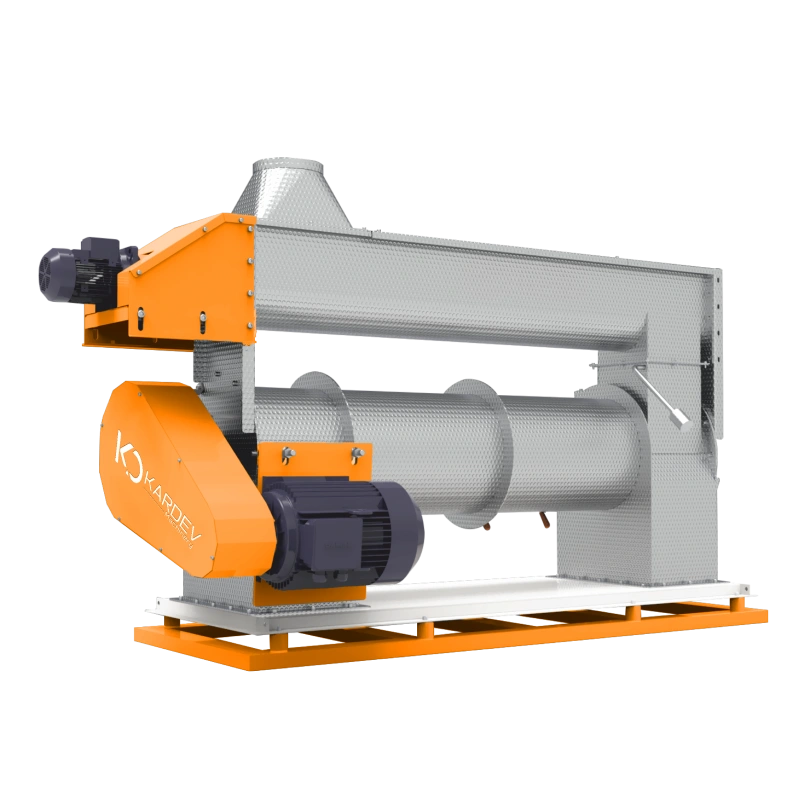
In a horizontal feed mixer, paddles or ribbons move the material in multiple directions along the mixer body.
This intensive material movement can provide shorter mixing cycles and good ingredient distribution when the mixer is correctly designed and operated.
Horizontal feed mixers are commonly used in industrial feed mills where premixes, vitamins and minerals must be distributed accurately throughout the feed batch.
When oil or other liquids are added, the liquid should preferably be distributed over a sufficiently wide area instead of being introduced at a single point.
Vertical Feed Mixer
In a vertical feed mixer, a vertical screw or auger lifts the material from the lower section of the mixer toward the top.
The product then falls back down and repeats this circulation several times until the ingredients are sufficiently mixed.
Vertical feed mixers are commonly found in small and medium-scale applications. Their relatively small floor space requirement can also be an advantage in certain installations.
However, mixing cycles are generally longer compared with horizontal feed mixers.
How to Select the Right Feed Mixer
Capacity is an important factor when selecting an industrial feed mixer, but it should never be considered alone.
The type of ingredients, batch size, mixing cycle, bulk density, liquid addition requirements and the required hourly production capacity should all be evaluated together.
Bulk density is particularly important when determining mixer capacity.
Two feed formulations occupying the same mixer volume may have significantly different weights. A high-fibre, low-density formulation and a grain-based formulation may therefore result in different batch weights in the same mixer.
Feed mixer capacity should not be evaluated only in kilograms or tonnes.
Hourly production capacity also depends on the complete batch cycle.
Dosing and filling, dry mixing, liquid addition when required, final mixing and discharge time all contribute to the total cycle time.
Even if the mixer itself completes mixing within a few minutes, slow filling or discharge can reduce the actual number of batches produced per hour.
KARDEV Custom Feed Mixer Solutions
One of the common problems in feed plants occurs when the mixer, feeding system and discharge equipment do not operate at the same production rate.
Even when mixing is complete, the next batch cannot start if the mixed product cannot be discharged quickly enough.
Mixer capacity should therefore be evaluated according to the complete production cycle rather than mixing time alone.
KARDEV Makina designs feed mixing systems according to the characteristics of the feed formulation, ingredient bulk density, batch size, required production capacity, liquid addition requirements and overall plant process.
The aim is to ensure that the mixer works efficiently with the rest of the production line without creating unnecessary delays between batches.
Contact KARDEV Makina for a feed mixer designed according to your production requirements.
Frequently Asked Questions
What materials can be mixed in a feed mixer?
Feed mixers can be used for ground grains, oilseed meals, bran, premixes, minerals and many other feed ingredients. Mixer design and operating conditions should be selected according to the feed formulation.
How is feed mixer capacity determined?
Feed mixer capacity should not be determined only by kilograms or tonnes. Bulk density, batch size, mixer working volume, filling and discharge times and the required number of batches per hour should all be considered.
Can liquids be added to a feed mixer?
Yes. Properly designed feed mixers can incorporate oils and other liquid ingredients. Liquid quantity, spray system, nozzle arrangement and distribution inside the mixer should be considered during engineering.
What determines the price of a feed mixer?
Feed mixer price depends on factors such as mixer capacity, mixing system, motor power, construction materials, liquid addition system, discharge arrangement, automation level and project-specific requirements.
Can KARDEV manufacture custom feed mixers?
Yes. KARDEV Makina evaluates production capacity, batch size, ingredient and formulation characteristics, liquid addition requirements and the overall feed mill process to develop a suitable feed mixing solution.
OTHER PRODUCTS
Quality is never a coincidence.