Hammer Mill
In animal feed production, raw materials must be reduced to a specific particle size to achieve the desired feed quality. This grinding process is performed by a hammer mill.
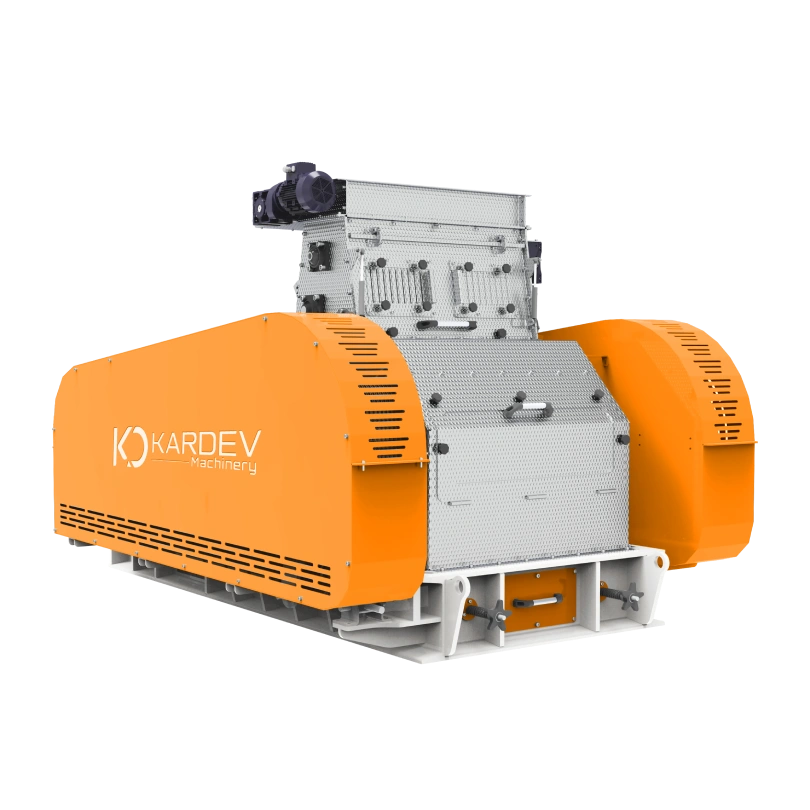
Also known as a feed hammer mill or hammer mill machine, a hammer mill is a mechanical grinding machine that reduces raw materials through the impact force generated by high-speed rotating hammers. It is widely used in feed mills, grain processing plants, and various industrial production facilities.

The purpose of grinding is not only to reduce the size of raw materials. A properly designed hammer mill helps achieve better particle size distribution, improves mixing efficiency, supports stable material flow in downstream processes, and prepares raw materials for processes such as pelleting.
For this reason, selecting the correct combination of screen size, hammer design, and operating parameters is critical for achieving the required feed quality.
Hammer mills are designed according to production capacity, raw material characteristics, and target particle size. Therefore, even two feed mills with the same production capacity may require different hammer mill configurations.
Working Principle of a Hammer Mill
The grinding process in a hammer mill starts with the rotation of hammers mounted on a high-speed rotor.
Raw materials enter the grinding chamber through the feeding section and are broken down by the impact force created by the rotating hammers. The material continues moving inside the grinding chamber until it reaches the screen area.
Particles that reach the required size pass through the perforated screen and leave the machine, while larger particles remain inside the grinding chamber and continue to be reduced by repeated hammer impacts.
The final grinding result is not determined only by rotor speed. Several factors directly affect the particle size distribution:
- Screen hole diameter
- Hammer wear condition
- Raw material moisture level
- Raw material hardness
- Feeding rate into the machine
In practical applications, it is common to obtain different results from two hammer mills with similar capacities. The reason is not always the machine itself. Evaluating only tons per hour without considering moisture content, screen size, hammer condition, and feeding consistency can lead to incorrect conclusions.
Hammer Mill Applications in Feed Mills
Raw materials used in feed production must reach the required particle size before entering mixing and pelleting processes.
The particle size distribution achieved after grinding directly affects feed quality and mixing performance.
The structure of the ground material is also critical during the pelleting process. Excessively coarse particles may create weak points inside pellets and reduce pellet durability. On the other hand, excessive fine grinding increases energy consumption, reduces mill capacity, and creates unnecessary dust formation.
The main objective is to achieve the optimum particle size distribution according to the type of feed being produced.
When the feeding system, screen selection, and hammer wear condition are properly managed, the hammer mill can operate with stable capacity and consistent grinding performance.
Factors Affecting Hammer Mill Capacity
Hammer mill capacity should always be evaluated as part of the complete feed production line.
Feeding System
A continuous and balanced material supply helps distribute the load evenly across the rotor. Many sudden capacity losses observed in feed mills are caused by unstable feeding conditions or insufficient equipment before the hammer mill.
Screen Size
Screen hole diameter determines the balance between grinding fineness and production capacity.
Smaller screen openings can provide finer grinding results; however, the longer retention time inside the grinding chamber may reduce capacity.
Larger screen openings allow faster material discharge but may result in a coarser particle size.
Hammer Wear
Hammer wear is another important factor affecting performance.
Worn hammers reduce the impact energy applied to raw materials, making it difficult to maintain capacity and consistent grinding quality.
Raw Material Characteristics
The physical properties of raw materials also influence hammer mill performance.
Published capacity values are generally based on specific conditions defined by the manufacturer, including raw material type, moisture content, screen size, and feeding conditions.
Therefore, catalogue capacity values may differ from actual production results in real operating conditions.
At KARDEV, our engineers evaluate raw material characteristics, required capacity, and complete production line requirements to determine the most suitable hammer mill configuration.
How to Select the Right Hammer Mill?
Hammer mill selection should not be based only on hourly production capacity.
Two feed mills with the same output requirement may need completely different grinding solutions depending on raw materials, target particle size, and production process requirements.
Important factors when selecting a hammer mill include:
- Production capacity of the feed mill
- Compatibility with feeding and downstream equipment
- Physical characteristics of raw materials
- Type of feed being produced
- Maintenance requirements
- Energy efficiency
- Target particle size distribution
Choosing the correct hammer mill design helps prevent future capacity losses and unnecessary operating costs.
KARDEV Custom Designed Hammer Mill Solutions
Every feed production facility has different requirements in terms of capacity, raw materials, and production targets.
Therefore, hammer mill selection should be based on engineering evaluation rather than standard solutions.
At KARDEV, we consider more than just capacity values. We evaluate:
- Raw material characteristics
- Target particle size
- Production line design
- Downstream process requirements
and provide hammer mill solutions specifically designed for each project.
Contact KARDEV to discuss your feed mill project and receive a grinding solution suitable for your production requirements.
Hammer Mill Spare Parts
Common hammer mill spare parts include:
- Hammers
- Screens
- Hammer pins
- Hammer holders
- Rotor shafts
- Bearings and bearing housings
- Couplings and coupling elements
- Seals and gaskets
- Wear plates
Using original and correctly selected spare parts helps maintain grinding performance and extend machine service life.
Frequently Asked Questions
What raw materials can be processed with a hammer mill?
Hammer mills can grind various raw materials including corn, wheat, barley, oats, rye, soybean meal, sunflower meal, and other plant-based feed ingredients.
Screen size and operating parameters can be adjusted according to the physical characteristics of the material.
How is hammer mill capacity determined?
Hammer mill capacity depends on several factors including motor power, screen diameter, raw material type, moisture level, feeding rate, and required particle size.
For this reason, capacity should always be evaluated according to actual production conditions.
Why does excessive dust occur in a hammer mill?
Excessive dust formation may be caused by an unsuitable screen size, worn hammers, or very dry raw materials.
In many cases, checking the screen and hammer condition can solve the problem without changing major machine settings.
How often should hammer mill maintenance be performed?
Maintenance frequency depends on operating hours, processed materials, and production intensity.
Regular inspection of hammers, screens, bearings, and mechanical connections helps maintain reliable performance.
Does KARDEV manufacture custom hammer mills?
Yes. KARDEV designs hammer mill solutions according to feed mill capacity, raw material characteristics, target particle size, and complete production line requirements.
OTHER PRODUCTS
Quality is never a coincidence.