Molasses Mixer
A molasses mixer is used in feed production to blend molasses and similar liquid additives with dry feed. The main objective is to distribute the liquid as evenly as possible throughout the product instead of allowing it to accumulate in specific areas.
Molasses does not flow like water. Its viscosity changes depending on temperature and dry matter content. When it becomes too viscous, pumping, spraying and distributing it through the feed becomes more difficult.
In KARDEV projects, molasses mixer selection is based not only on line capacity but also on the required molasses percentage, product flow and mixing conditions.

What Is a Molasses Mixer and Where Is It Used?
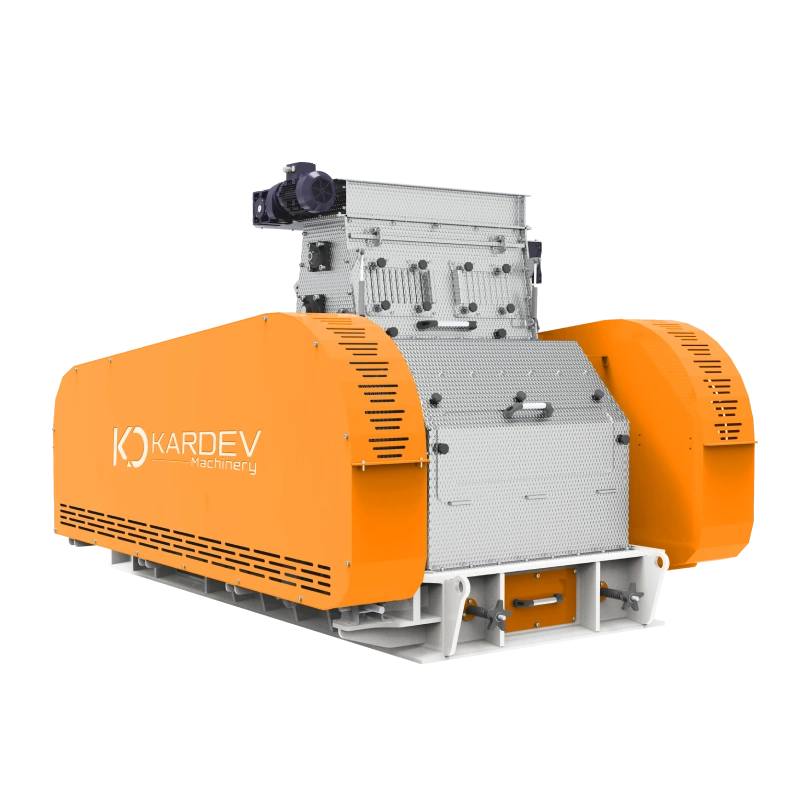
A molasses mixer is a continuous mixing machine designed to combine dry feed with liquid molasses.
It is commonly used in compound feed plants producing cattle and small-ruminant feeds. Depending on the process layout, it can be installed after dosing and mixing or before the pelletizing section.
During operation, dry feed enters the mixer while a controlled amount of molasses is applied to the moving product. Paddles mounted on the shaft move the feed through the machine and help distribute the liquid throughout the material.
The residence time inside the mixer is also important. The product must remain inside the machine long enough for the molasses to be distributed effectively before discharge.
How Is Molasses Dosed and Sprayed?
Adding molasses into the machine is not sufficient by itself. The liquid flow must be adjusted according to the amount of dry feed passing through the line.
The required molasses flow is determined according to the feed rate and the percentage specified in the formulation. If the dry product flow changes, the molasses feed should change accordingly.
Molasses flow can be monitored by a flowmeter, while tank and pipeline temperature can be measured with equipment such as PT100 temperature sensors.
Depending on the system design, more than one spray point may be used. Nozzle position and spray direction should be arranged so that the molasses reaches the moving product as evenly as possible.
After spraying, the paddles continue distributing the liquid through the feed. If molasses begins to concentrate in one area, nozzle arrangement, spray direction and paddle settings should be checked.
How Is Molasses Mixer Capacity Determined?
Molasses mixer capacity is primarily based on the hourly dry feed throughput. However, selecting the machine only according to tonnage is not sufficient.
The molasses ratio, product residence time and the capacities of the upstream and downstream equipment should also be considered.
For example, if the upstream equipment delivers 15 t/h but the molasses mixer cannot process the same flow under the required mixing conditions, the mixer may become a bottleneck in the production line.
Molasses percentage also affects system sizing. A formulation containing 2% molasses and another containing 8% molasses require different pump and spraying capacities even if the dry feed throughput is the same.
Paddle angle also influences how quickly the material moves through the machine. By adjusting paddle position, the residence time and mixing behaviour can be optimized during commissioning.
What Temperature Should Molasses Be Applied At?
Molasses temperature directly affects pumping and spraying performance. Cold molasses is more viscous and therefore more difficult to pump and atomize through the nozzles.
In KARDEV applications, depending on the characteristics of the molasses, temperatures around 40–42°C may be used to achieve suitable flowability. Tank and pipeline temperature should also be monitored, especially in cold operating conditions.
Excessive heating should be avoided. The required temperature should be selected according to the properties of the molasses and the design of the liquid feeding system.
What Happens If Too Much Molasses Is Added?
As the molasses ratio increases, mixing becomes more difficult.
Excessive liquid can lead to sticking, lump formation and product buildup inside the machine. If the spraying rate exceeds the distribution capacity of the mixer, wet and sticky areas may appear in the discharged product.
This can also increase cleaning requirements, particularly around the paddles, inner surfaces and discharge section.
Can a Molasses Mixer Be Integrated with Automation?
Yes. A molasses mixer can be integrated into the feed mill automation system.
The dry feed rate and molasses flow should be controlled together. For example, if a formulation requires 5% molasses, the liquid flow should change when the dry feed rate changes.
Depending on the system configuration, pump operation, molasses flow and temperature can be monitored through the automation system. Different molasses ratios can also be assigned to different feed formulas.
How Often Should a Molasses Mixer Be Cleaned?
There is no single cleaning interval suitable for every plant.
Cleaning frequency depends mainly on:
- Daily operating hours
- Molasses percentage
- Product buildup inside the machine
- Feed formulation and operating conditions
Because molasses is sticky, deposits may gradually form on the paddles, inner body surfaces and discharge area. Cleaning should be carried out before these deposits begin to affect product flow or mixing performance.
Molasses Mixer Technical Features
- Available in different sizes according to required capacity
- Single-shaft or twin-shaft configurations
- Body manufactured from ST37 or AISI 304 depending on application
- PE1000 internal lining can be used where required
- Maintenance and inspection access doors
- Flowmeter-based molasses dosing can be integrated
- PT100 temperature monitoring can be included in the liquid system
OTHER PRODUCTS
Quality is never a coincidence.